
As summer 2026 approaches, sunscreen season is back — and so is the conversation about what’s actually in your SPF.
Most conventional sunscreens contain chemical filters like oxybenzone and octinoxate that have been shown to damage coral reefs, disrupt marine life, and even accumulate in the human bloodstream.
Hawaii and Mexico’s Riviera Maya have already banned these chemicals to protect their fragile reef ecosystems.
The good news? Reef-safe mineral sunscreens have come a long way in 2026. They’re lighter, less chalky, and every bit as effective as their chemical counterparts — without the ecological damage.
Here’s our guide to the best reef-safe mineral sunscreens you can buy right now, with options for every skin type, activity level, and budget.
Table of Contents
What Makes a Sunscreen Truly “Reef-Safe”?
Not all sunscreens marketed as “reef-safe” actually are. The term isn’t officially regulated by the FDA, so brands can put it on almost anything.
Here’s what to actually look for on the label:
Active ingredients: Only zinc oxide and/or titanium dioxide are considered reef-safe. Anything else — oxybenzone, octinoxate, homosalate, octocrylene — has been linked to coral bleaching and hormone disruption in marine animals.
Non-nano particles: Look for “non-nano” zinc oxide. Nano-sized particles are small enough to be absorbed by coral polyps, which can be toxic.
Non-nano particles stay on the surface of the reef and don’t cause the same harm.
Biodegradable formula: True reef-safe sunscreens break down naturally in water without leaving behind harmful residues.
Certifications to trust: Hawaii Reef Act 104 Compliant, Protect Land + Sea Certified, BPI Certified Biodegradable, or EWG Verified are all good indicators.
Mineral vs. Chemical Sunscreen: Why It Matters
Mineral sunscreens work by physically blocking UV rays — the zinc oxide or titanium dioxide sits on top of your skin and reflects sunlight away, like a tiny mirror shield.
Chemical sunscreens work differently. They absorb into the skin and convert UV radiation to heat.
That sounds fine in theory, but these chemical filters also wash off into the ocean when you swim — and they’ve been shown to cause coral bleaching at concentrations as low as 62 parts per trillion.
That’s roughly one drop in an Olympic-sized swimming pool.
Mineral formulas stay on the surface of your skin, which means less absorption into your bloodstream and significantly less harm when they rinse off into the water.
Our Top Reef-Safe Mineral Sunscreen Picks for 2026
1. Badger Reef Safe Sport Mineral Sunscreen SPF 40
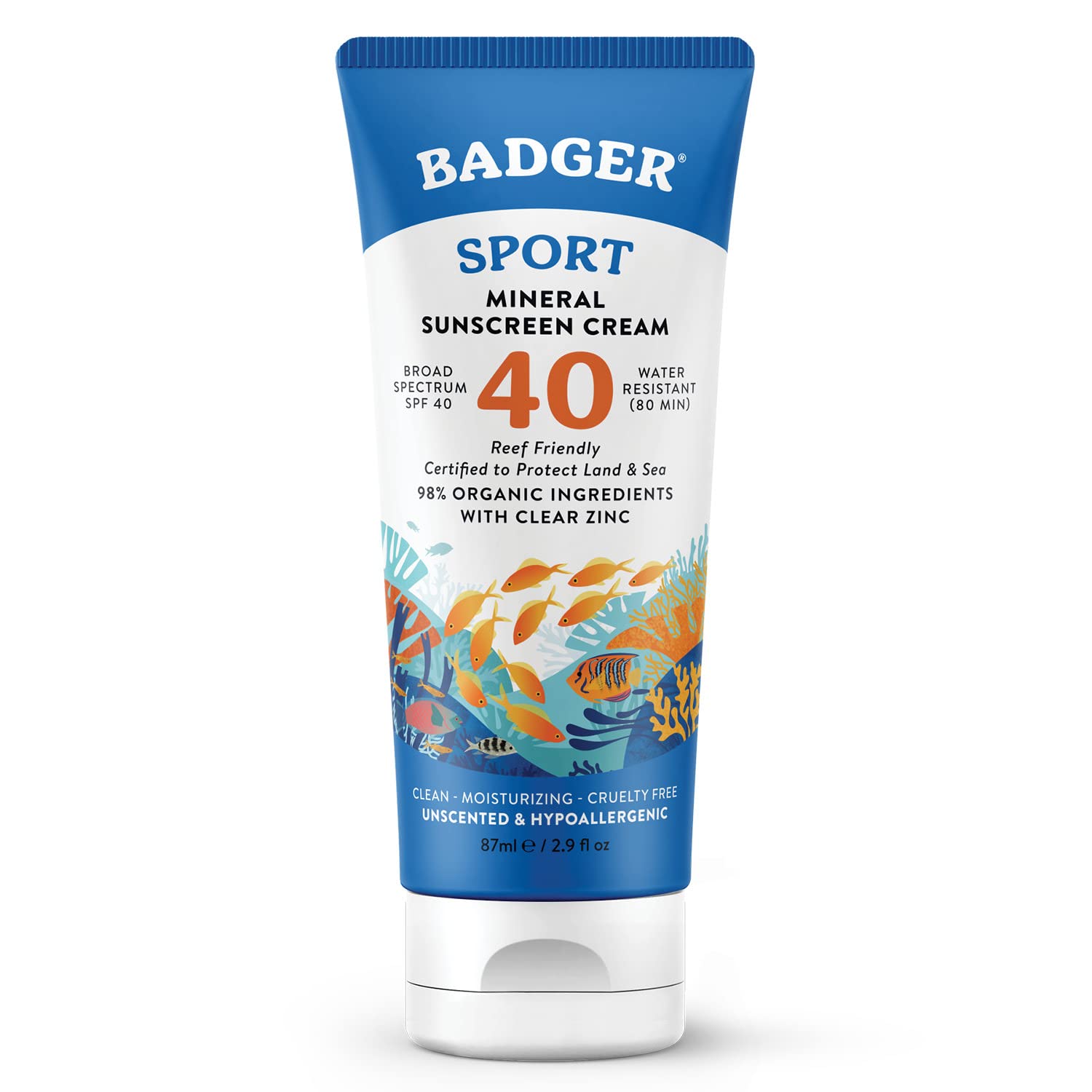
Badger has been making clean, minimal-ingredient sunscreens for over a decade, and their SPF 40 Sport formula remains one of our top picks for 2026.
It’s made with just four simple ingredients: 22.5% non-nano zinc oxide, organic sunflower oil, organic beeswax, and vitamin E. No synthetic fragrances, no chemical filters, no questionable preservatives.
The formula is 98% certified organic, water-resistant for 80 minutes, and approved for both Hawaii and Mexico reef-protected zones.
It goes on slightly white — the trade-off with any mineral sunscreen — but blends in well for fair to medium skin tones.
Badger also uses recyclable aluminum tubes and soy-based ink printing, so the packaging is as clean as the formula.
2. Reef Repair Natural Mineral Sunscreen SPF 30+
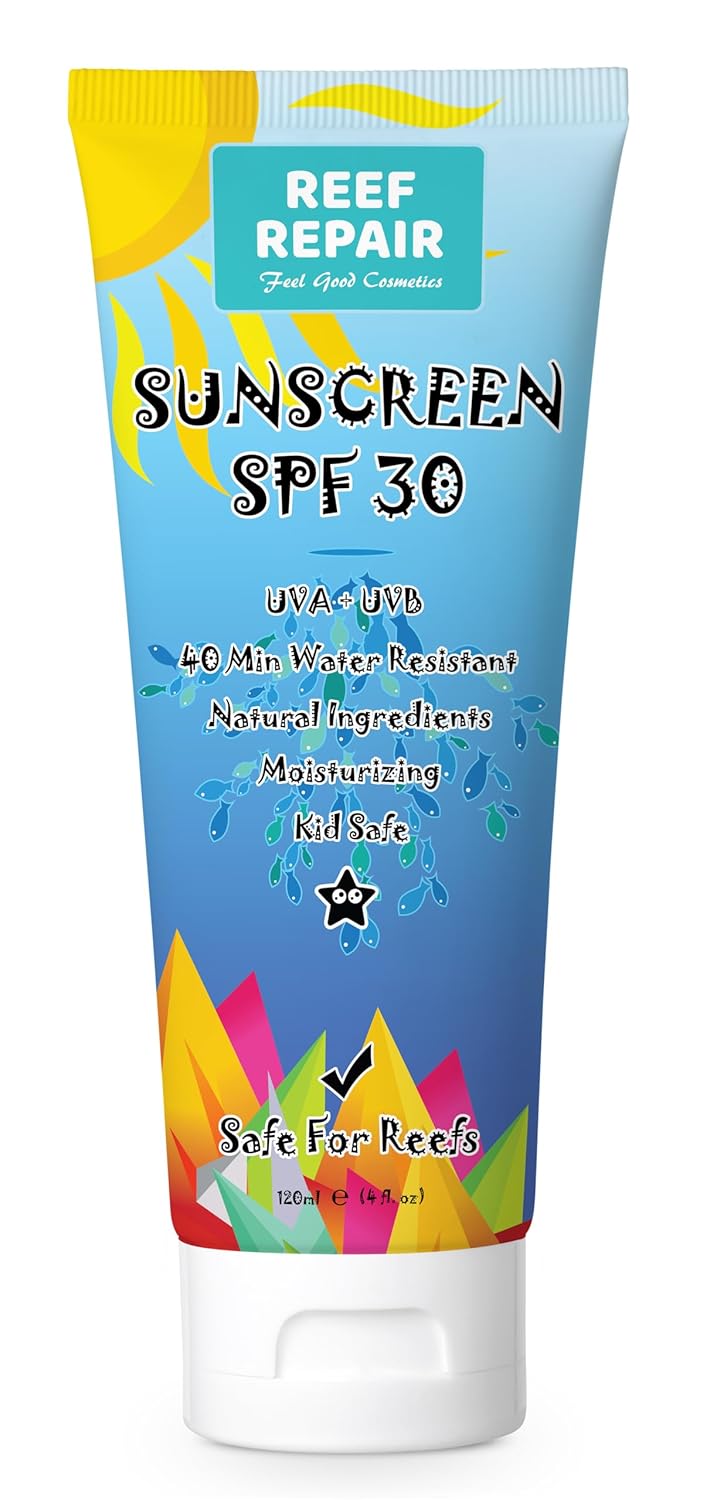
If you’re looking for a moisturizing, skin-nourishing formula that works as well for a beach day as everyday wear, Reef Repair is worth a serious look.
This brand formulates specifically for reef-conscious swimmers and divers. Their SPF 30+ mineral suncream uses zinc oxide as the active ingredient, paired with natural moisturizers that leave skin feeling soft rather than chalky or dried out.
The formula is broad-spectrum UVA/UVB, water-resistant, and biodegradable. It’s free from oxybenzone, octinoxate, and all synthetic fragrances.
A great choice for anyone with dry or sensitive skin who has found other mineral formulas too drying or heavy.
3. Coral Safe Mineral Sunscreen SPF 50 Face Stick
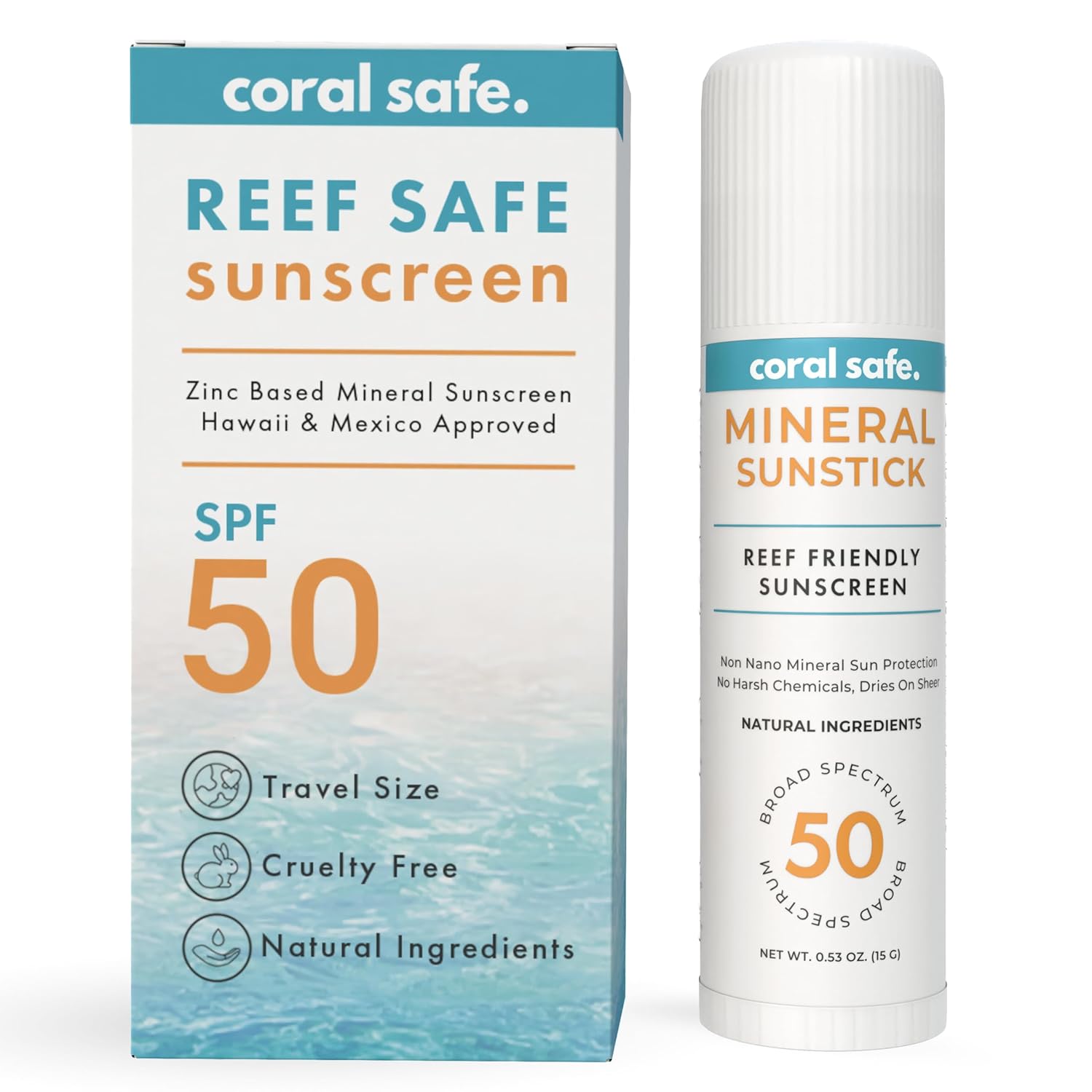
For face-specific application, a solid stick sunscreen is often easier to apply and less likely to run into your eyes. Coral Safe’s SPF 50 Face Stick hits all the right marks.
It’s compliant with Hawaii’s Act 104 and Mexico’s reef protection laws, uses zinc oxide as the sole active ingredient, and is formulated without oxybenzone, octinoxate, or synthetic fragrances.
The stick format makes it ideal for reapplication throughout the day — just swipe it on over existing sunscreen without the mess of a lotion. It’s also compact and TSA-friendly.
The formula includes natural ingredients like sunflower seed oil, coconut oil, and olive oil that provide skin-nourishing benefits alongside the UV protection.
At SPF 50, this offers stronger protection for high-exposure activities like skiing, hiking at altitude, or long days on the water.
4. Reef Safe Mineral Sunscreen SPF 50 — Organic and Vegan
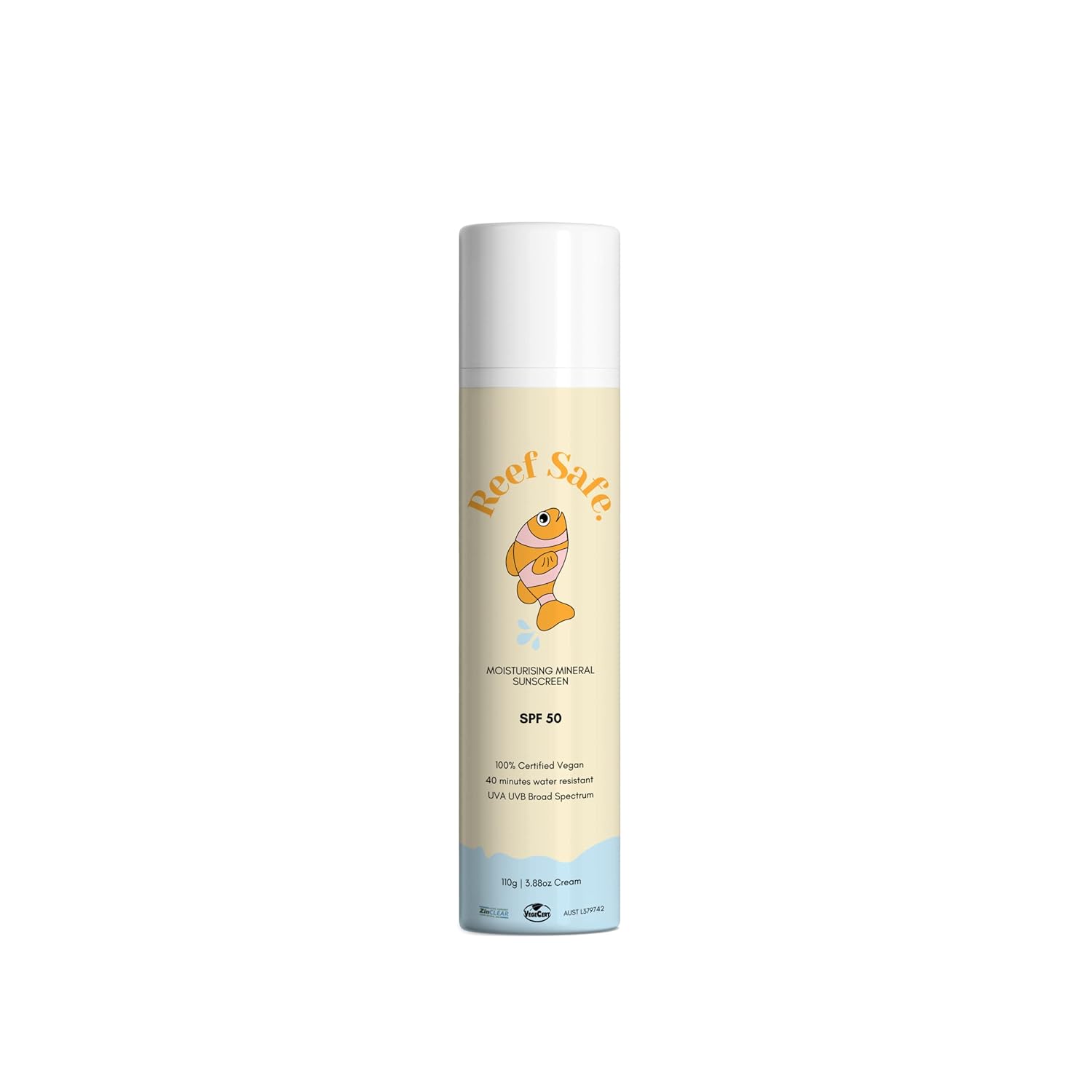
For those who want a fully vegan, organic formula that’s pool-safe and reef-safe, this SPF 50 mineral sunscreen delivers solid broad-spectrum protection with a clean ingredient list.
It’s formulated for sensitive skin, free from parabens, synthetic fragrances, and chemical UV filters, and certified as both reef-safe and pool-safe.
The texture is lighter than many mineral sunscreens, which makes it easier to blend and less likely to leave a heavy white cast.
It works well as a daily driver for face and body, whether you’re heading to the beach or just running errands.
Tips for Getting the Most Out of Mineral Sunscreen
Apply to dry skin: Mineral sunscreen is more effective when applied to completely dry skin before heading outside, rather than right before jumping in the water.
Use more than you think you need: Most people apply about 25 to 50 percent of the recommended amount. A teaspoon for your face and a shot-glass worth for your body is the standard recommendation.
Reapply every 2 hours: Even water-resistant formulas need to be reapplied after swimming or heavy sweating. Set a timer if you have to.
Don’t skip cloudy days: Up to 80% of UV rays penetrate cloud cover. Mineral SPF is still necessary on overcast days, especially near water or snow.
What to Avoid When Shopping for Reef-Safe Sunscreen
Watch out for greenwashing. Some brands label their products “reef-friendly” or “ocean-safe” while still including chemical filters linked to coral damage.
Avoid these active ingredients: oxybenzone, octinoxate, homosalate, avobenzone, and octocrylene.
If any of these appear in the “active ingredients” section, the sunscreen is not truly reef-safe — regardless of the marketing language on the front of the bottle.
Also be cautious of “nano” zinc oxide or titanium dioxide. While technically still mineral, nano-particle versions are small enough to penetrate coral tissue and may cause harm at high concentrations.
Making the Switch: Is It Worth It?
Switching to a reef-safe mineral sunscreen is one of the simplest eco swaps you can make — and it benefits you as much as it benefits the ocean.
Chemical sunscreen ingredients have been detected in blood, urine, and breast milk after just a single application.
Zinc oxide, by contrast, has a long safety record and is one of the most widely recommended ingredients by dermatologists for sensitive skin, babies, and pregnant women.
You get the same protection, better ingredient transparency, and the peace of mind of knowing you’re not washing harmful chemicals into the waterways every time you swim, shower, or sweat.
For summer 2026, that feels like the right call.
Final Thoughts
Reef-safe mineral sunscreen has never been easier to find — or more effective.
Whether you need a lightweight daily formula, a heavy-duty sport option, or a convenient face stick for on-the-go reapplication, the picks in this guide cover all the bases.
Our top recommendation for most people is the Badger Reef Safe Sport SPF 40 for its clean ingredients, proven performance, and eco-responsible packaging.
For a high-SPF face option, the Coral Safe SPF 50 Face Stick is hard to beat.
Protect your skin, protect the reefs, and enjoy a guilt-free summer.